Embedded UX in a Growing B2B Platform
Time
2021-2023
Role
Product designer
Team
3-5 Developer
1 Product manager
2 Stakholders
Focus
User flows,
UI Design & Frontend
Design System
Overview
My role
Approach
Outcome
Reflection
Overview
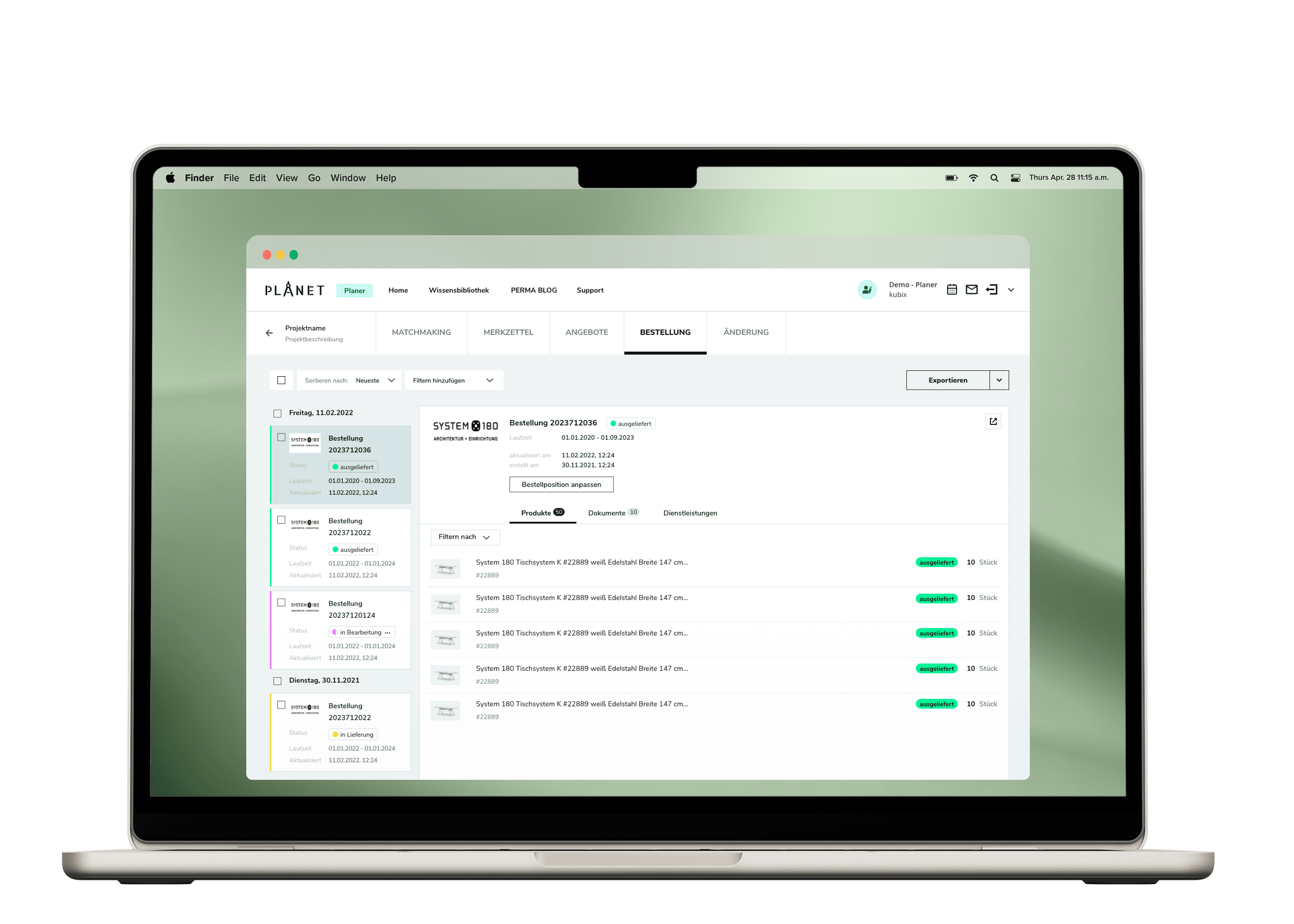
PERMA was a research-driven B2B platform focused on circular furniture workflows. I worked as the sole designer in a developer-heavy team from early structural setup to Alpha release. Over three years, the platform expanded to more than 30 features across planners, manufacturers and service providers.
Overview
PERMA was a research-driven B2B platform focused on circular furniture workflows. I worked as the sole designer in a developer-heavy team from early structural setup to Alpha release. Over three years, the platform expanded to more than 30 features across planners, manufacturers and service providers.
Overview
PERMA was a research-driven B2B platform focused on circular furniture workflows. I worked as the sole designer in a developer-heavy team from early structural setup to Alpha release. Over three years, the platform expanded to more than 30 features across planners, manufacturers and service providers.
Project story
The PERMA project, supported by the Bundesministerium für Bildung und Forschung, is a collaborative circular economy research initiative. It was developed to promote a circular economy in the furniture industry, focusing on resource efficiency and sustainability.
Click to

Project Partners & Stakeholders

My Role
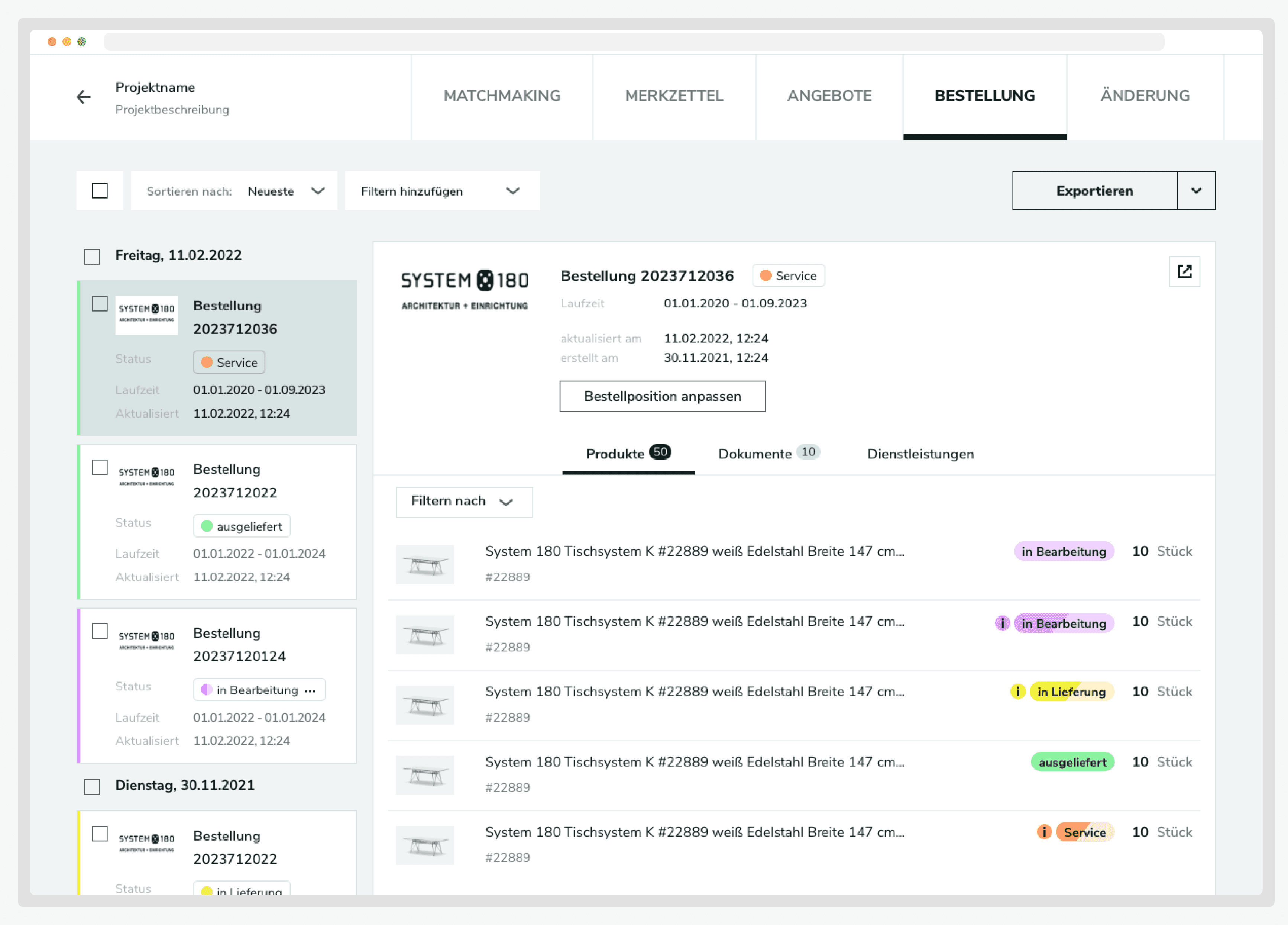
My role evolved over time: Early stage I established baseline workflow structures under high uncertainty, designing adaptable patterns while business logic and user roles were still being defined. Middle stage We transitioned from a catalog-style structure to a project-based workflow, aligning the platform with professional planning processes. Later stage As feature growth accelerated, I focused on maintaining workflow consistency, identifying feature dependencies, and aligning stakeholder needs with technical feasibility.
My Role
My role evolved over time: Early stage I established baseline workflow structures under high uncertainty, designing adaptable patterns while business logic and user roles were still being defined. Middle stage We transitioned from a catalog-style structure to a project-based workflow, aligning the platform with professional planning processes. Later stage As feature growth accelerated, I focused on maintaining workflow consistency, identifying feature dependencies, and aligning stakeholder needs with technical feasibility.
My Role
My role evolved over time: Early stage I established baseline workflow structures under high uncertainty, designing adaptable patterns while business logic and user roles were still being defined. Middle stage We transitioned from a catalog-style structure to a project-based workflow, aligning the platform with professional planning processes. Later stage As feature growth accelerated, I focused on maintaining workflow consistency, identifying feature dependencies, and aligning stakeholder needs with technical feasibility.
Design Approach
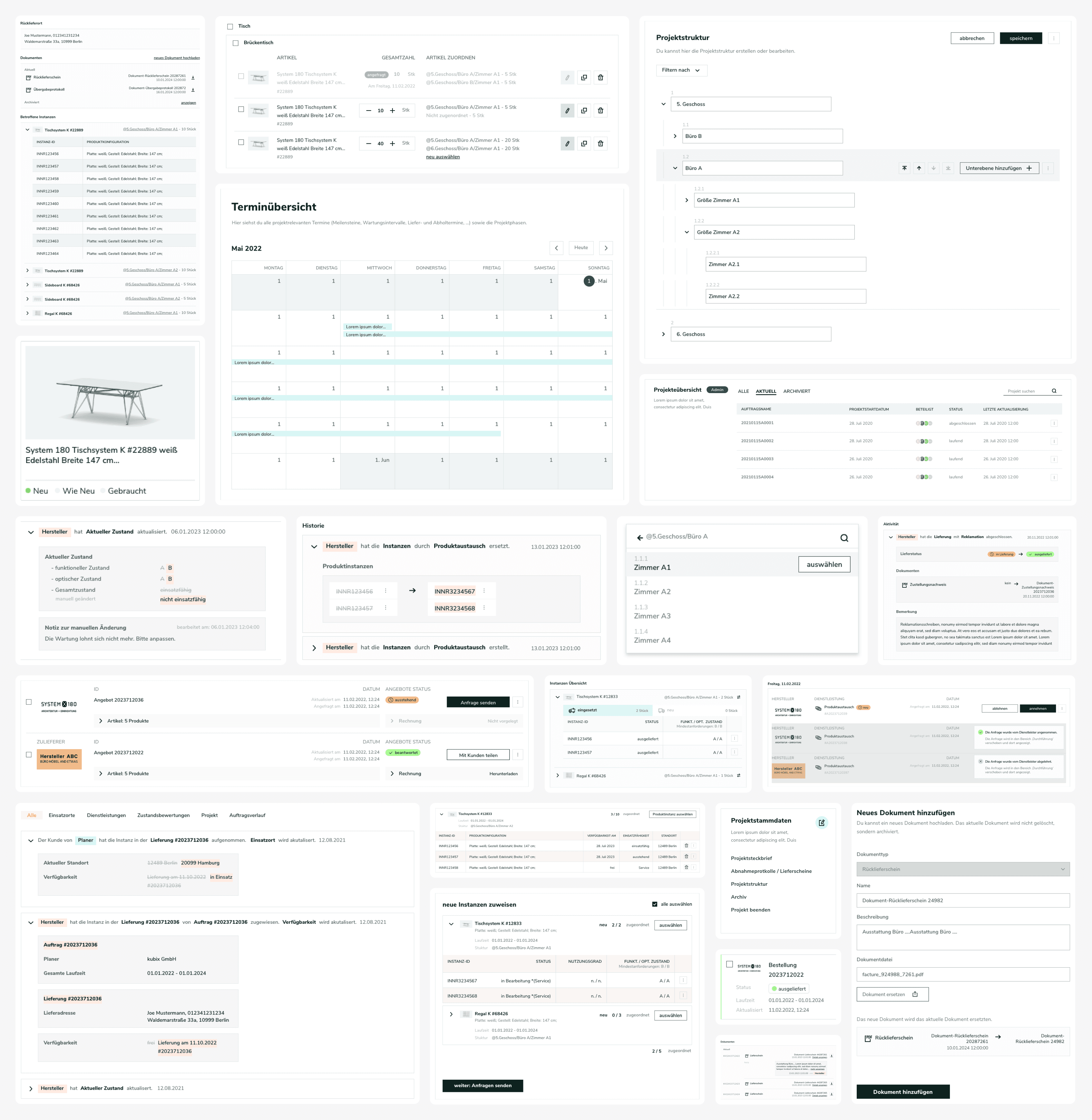
As the platform scaled, new features were often introduced by extending existing backend structures. While technically efficient, this sometimes risked creating conflicts between related workflows. My role was to ensure that new functionality could integrate into the existing system without fragmenting interaction logic. When ideal solutions were not feasible within a sprint, improvements were sequenced across iterations. I worked continuously between stakeholder discussions and technical reviews, translating workflow requirements into implementable structures.
Design Approach
As the platform scaled, new features were often introduced by extending existing backend structures. While technically efficient, this sometimes risked creating conflicts between related workflows. My role was to ensure that new functionality could integrate into the existing system without fragmenting interaction logic. When ideal solutions were not feasible within a sprint, improvements were sequenced across iterations. I worked continuously between stakeholder discussions and technical reviews, translating workflow requirements into implementable structures.
Design Approach
As the platform scaled, new features were often introduced by extending existing backend structures. While technically efficient, this sometimes risked creating conflicts between related workflows. My role was to ensure that new functionality could integrate into the existing system without fragmenting interaction logic. When ideal solutions were not feasible within a sprint, improvements were sequenced across iterations. I worked continuously between stakeholder discussions and technical reviews, translating workflow requirements into implementable structures.
Outcome
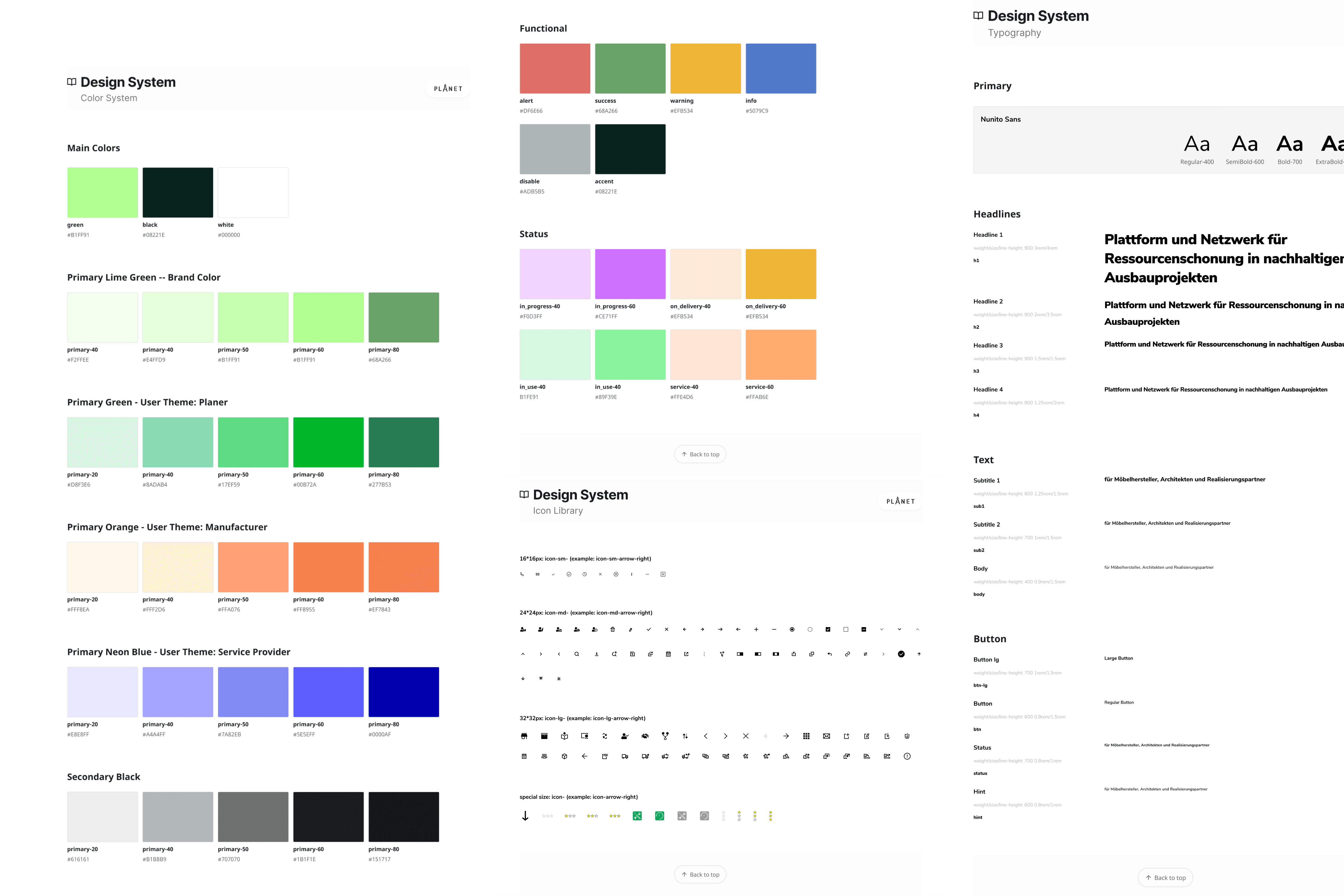
• 30+ features implemented across three main user groups • Unified design system supporting scalable development • Improved collaboration maturity between design and engineering • A structural foundation that sustained platform growth over multiple phases
Outcome
• 30+ features implemented across three main user groups • Unified design system supporting scalable development • Improved collaboration maturity between design and engineering • A structural foundation that sustained platform growth over multiple phases
Outcome
• 30+ features implemented across three main user groups • Unified design system supporting scalable development • Improved collaboration maturity between design and engineering • A structural foundation that sustained platform growth over multiple phases
Reflection & the future of PERMA
Over three years, PERMA developed into an Alpha platform supporting complex, multi-user workflows. My role evolved from interface execution to structural ownership, ensuring that feature growth did not compromise system clarity. The project concluded in September 2023 with the end of its research funding. The Alpha version was taken offline in January 2024.
Reflection & the future of PERMA
Over three years, PERMA developed into an Alpha platform supporting complex, multi-user workflows. My role evolved from interface execution to structural ownership, ensuring that feature growth did not compromise system clarity. The project concluded in September 2023 with the end of its research funding. The Alpha version was taken offline in January 2024.
Reflection & the future of PERMA
Over three years, PERMA developed into an Alpha platform supporting complex, multi-user workflows. My role evolved from interface execution to structural ownership, ensuring that feature growth did not compromise system clarity. The project concluded in September 2023 with the end of its research funding. The Alpha version was taken offline in January 2024.
Get in touch
Get in touch
Work with Liwei to make your product more thoughtful and easier to use.
Work with Liwei to make your product more thoughtful and easier to use.
Liweiworks
Liweiworks
© liweiworks.com All rights reserved
© liweiworks.com All rights reserved